Review: Cowboy Bear Clipart SVG for Embroidery Projects
As a designer who spends half my life staring at stitch charts and the other half worrying about whether a customer’s sweatshirt will survive its first wash, I approach every new Cowboy Bear Clipart SVG with a mix of curiosity and skepticism. We’ve all seen the cute animal graphics that look adorable on screen but turn into a muddy, tangled mess when transferred to fabric. That is why I am taking this specific design out for a real-world spin. This isn’t just about looking pretty; it is about functionality, marketability, and how well this embroidery file holds up under the needle.
The product falls under the Freebies category within Graphics, which immediately raises the stakes. When something is free, we often assume it might be low effort or overly generic. However, bringing your creative projects to life requires assets that are versatile enough for crafting, printing, and digital use. This Cowboy Bear Svg claims compatibility with popular cutting machines like Cricut and Silhouette, but today, I am focusing entirely on its potential as a machine embroidery design. If you are an Etsy seller, a small shop owner, or a hobbyist maker, you need to know if this character has the legs to become a bestseller or if it should stay in the drafts folder.
First Impressions and Visual Personality
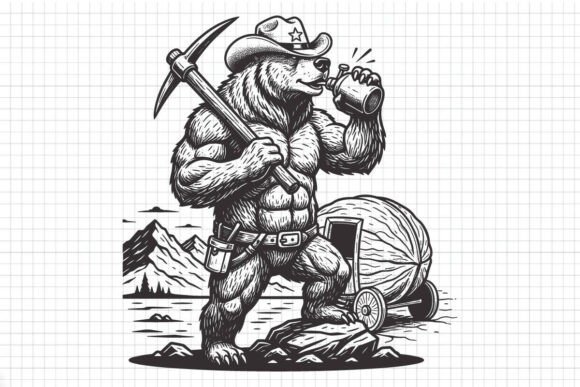
The moment you open the file, the mood is distinct. It leans heavily into rustic charm mixed with modern whimsy. The bear isn’t just a bear; it’s wearing that cowboy aesthetic that screams "Western" without being cliché. For designers, the visual personality is key because it dictates where the design can live. This isn’t a subtle, minimalist logo. It is a statement piece.
From a layout perspective, the shape feels balanced. There is a natural negative space that suggests it could work well centered on a chest pocket or as a focal point on a larger garment. The detail level is moderate—enough to show character in the hat and facial features, but not so intricate that it risks becoming illegible when stitched small. This is crucial for custom apparel. If the details are too fine, they disappear into the fabric texture. Here, the bold lines suggest it would hold its own against the grain of denim or the fuzz of fleece.
Real-World Application: The Tote Bag Test
To truly judge this Cowboy Bear Clipart SVG, I imagine it in a high-stakes scenario: a custom embroidered tote bag for a boutique gift shop. Picture a sturdy canvas tote, perhaps in a natural oatmeal color. Placing this design in the center creates an instant connection with the buyer. It feels personal, handmade, and thoughtful.
But let’s look closer. How does it translate? As a tote bag design, the bear becomes a mascot for the brand. Customers love characters because they create emotional engagement. A plain geometric shape is nice, but a bear in a cowboy hat tells a story. It suggests adventure, playfulness, and a touch of nostalgia. For a small business merchandise line, this kind of recognition is gold. It makes the product feel like a collectible rather than just a utility item.
I also see this working beautifully as an embroidered patch for a denim jacket or a backpack. The rugged nature of the cowboy theme pairs perfectly with the durability implied by patches. It transforms a basic garment into a personalized statement. If you are selling these patches on Etsy, the listing photos will practically sell themselves because the subject matter is so inherently photogenic.
Performance on Different Fabrics and Garments
Not all fabrics treat an embroidery project the same way. Here is where my practical experience comes into play. This Cowboy Bear Svg likely relies on a combination of fill stitches for the body and satin stitches for outlines or text. On smooth cottons and linens, it should pop. The thread colors will stand out clearly.
However, consider sweatshirt embroidery. Heavy French terry or fleece can hide details. You might need to adjust the stabilizer or add a tear-away backing to prevent the bear from sinking into the pile. Also, think about caps and hats. Curved surfaces are tricky. If the design is too wide, it might pucker at the edges. I would recommend testing this on a pre-curved cap before committing to a bulk order for a craft fair.
For baby clothes, the softness of the bear’s implied texture works well. But remember, baby items need frequent washing. The stitching density must be tight enough to withstand agitation but not so dense that it becomes stiff and uncomfortable against sensitive skin. This is a common pitfall for new Etsy sellers who overlook the tactile experience of the finished product.
Where to Use Caution
There are places where this Cowboy Bear Clipart SVG might struggle. Avoid placing it on highly textured fabrics like bouclé or thick chenille unless you have significant experience. The background noise of the fabric will clash with the design’s details. Similarly, thin fabrics like silk or lightweight rayon require careful hooping and stabilization to prevent distortion. If the bear’s outline is delicate, it might break or blur on stretchy knits unless you use a strong water-soluble stabilizer.
Also, be mindful of dark fabrics. If the design uses light threads, you may need a dense underlay to prevent the fabric color from showing through. Conversely, if the design is primarily black, it might get lost on dark denim. Always check your thread colors against your base material. A quick black-and-white mockup can save you hours of re-threading.
Designer Notes for Success
Before you upload this digital embroidery file to your machine, take these steps:
- Test on Scrap Fabric: Never trust a screen preview. Stitch it out on the exact fabric you plan to use. Check for puckering and clarity.
- Check Stitch Density: Look at the fill stitch areas. Are they too sparse? Too dense? Adjust if necessary to ensure the bear looks solid, not see-through.
- Inspect Small Details: Zoom in on the hat brim and eyes. Are they distinct? If they merge together in the digitizing, you may need to simplify the design or increase the hoop size.
- Stabilizer Choice: Use a quality cut-away stabilizer for woven garments and a tear-away for non-wovens. Proper support is the difference between a professional finish and a wobbly disaster.
- Licensing: Even though this is listed under Freebies, always read the fine print. Can you sell the finished physical items? Can you use it in commercial embroidery projects? Clarifying this protects your craft business from legal issues.
Final Verdict
The Cowboy Bear Clipart SVG is more than just a cute graphic; it is a viable asset for makers who understand the nuances of textile design. It bridges the gap between digital art and tangible goods effectively. Its charm lies in its versatility—it fits as well on a kitchen towel as it does on a holiday gift tag.
For the creative entrepreneur, this design offers a low-risk, high-reward opportunity. It adds personality to your shop without requiring a massive investment. Whether you are creating personalized gifts for weddings or building a brand identity for a boutique, this bear brings a friendly, approachable vibe that customers respond to. Just remember: the magic happens in the execution. Treat the digitizing process with respect, choose your materials wisely, and this Cowboy Bear will carry your brand forward with style and substance.